
One of the most powerful tools a manager has isn't a dashboard, a KPI report, or a project timeline. It's a conversation.
Consistent, thoughtful check-ins are one of the strongest predictors of employee engagement and retention. Yet they're often rushed, skipped, or reduced to performance updates --- missing the opportunity to build real connection.
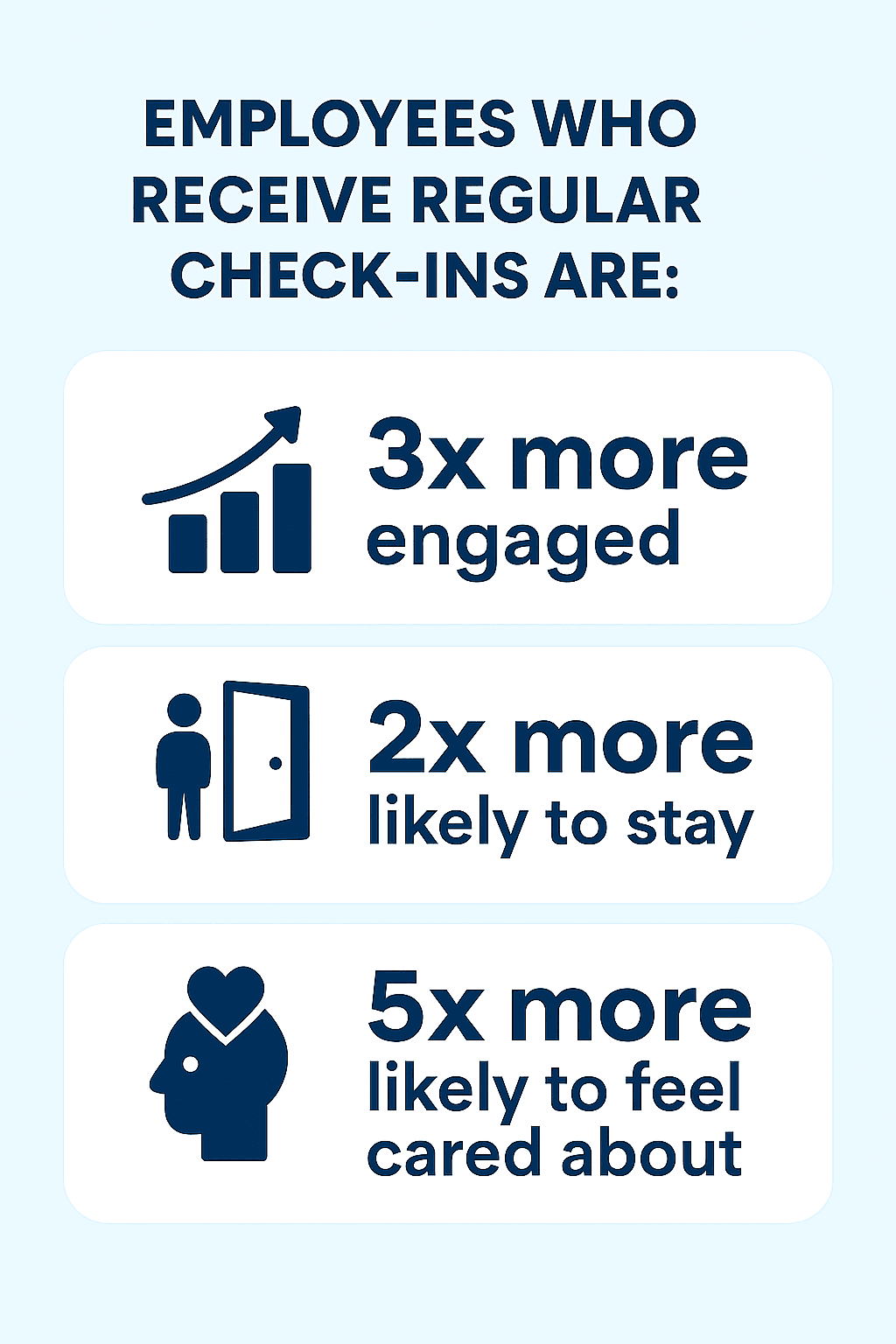
According to How to Build a Better Manager, employees who have weekly 1:1s are:
- 3x more engaged
- 2x more likely to stay with their company
- 5x more likely to feel their manager cares about them as a person
Check-ins aren't about micro-managing. They're about meaning-making.
Why Check-ins Work
Regular check-ins signal:
- "You matter to me."
- "I'm paying attention."
- "You don't have to carry everything alone."
Even 15 minutes of intentional conversation can recalibrate motivation, reduce stress, and surface issues early. Gallup's research shows that managers account for 70% of the variance in team engagement.
Key idea: The manager-employee relationship is the single biggest lever for engagement. Check-ins are where that relationship is built.
What Makes a Check-In Effective
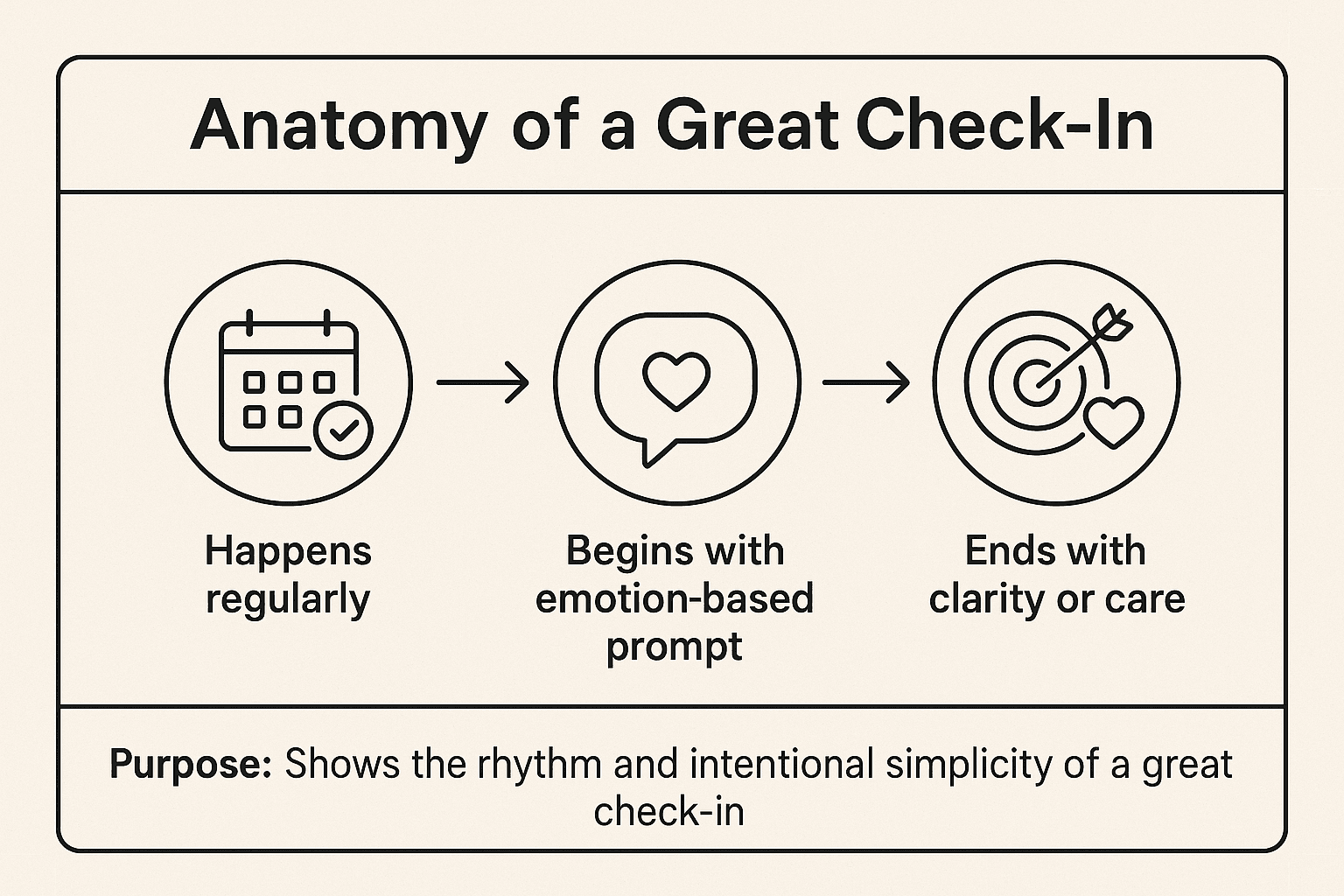
1. It happens regularly
Weekly or biweekly is ideal. The consistency is more important than the length.
2. It includes emotional space
Start by asking:
- "How are you feeling about things right now?"
- "What's been energizing or draining this week?"
3. It ends with clarity or care
You don't always need action steps --- but you do need closure.
- "What do you need from me this week?"
- "Thanks for sharing --- let's revisit this next time."
Common Mistakes to Avoid
Skipping when "things are fine" --- Check-ins are for maintenance, not just problem-solving.
Treating them like performance reviews --- These are relational moments, not scorecards.
Focusing only on tasks --- If you only ask about to-dos, you'll miss what's really going on.
Questions That Deepen Trust
Use a few of these to go deeper over time:
- "What's something you wish more people understood about your role?"
- "What's one small thing that would make your week better?"
- "Is anything on your plate that doesn't need to be there?"
The key is listening --- not fixing. Let the person guide the depth.
Bottom Line
When managers show up consistently and listen well, everything else gets easier: communication, retention, morale, and trust. There's no shortcut to this --- only intention and follow-through.
If you want to improve performance, reduce burnout, and retain your best people, start with this simple rhythm:
Show up. Listen. Repeat.